Technology as a way of life

Life is the art of drawing without an eraser...

Since i talked about the new drivers made for Windows 7 in the previous post, let me point out the main feature of it which is the Windows Display Driver Model (WDDM v1.1). Vista and XP used version 1.0 of the driver.

What's the big difference you ask from such a small revision number? Answer: A LOT!

So what do you get with WDDM 1.1? For starters, the DWM (Desktop Window Manager) will use DirectX 10 instead of 9 and offer some nice performance enhancements. DWM will now use the same consistent amount of system memory no matter how many windows are open. Your graphics card memory usage will still increase as you open more windows, but that amount of memory is cut in half relative to Vista.

The end result is that Windows 7 will use dramatically less memory as you open additional windows on your desktop. It should also be faster and more efficient at rendering the desktop.

Windows 7 will introduce Direct2D, a sort of accelerated 2D replacement for GDI used for drawing 2D graphics, lines, splines, etc. It runs on top of Direct3D 10 and requires WDDM 1.1 drivers. This has been long awaited, and future applications should see snappier windows performance in standard applications, not just 3D apps.

DirectX 10 games should see a performance improvement with WDDM 1.1 drivers, mostly centered around memory management. It's still far too early for Microsoft to share any sort of numbers, but it seems to suggest that the performance difference will vary by title.

Don't you hate it when a media application uses the video overlay function of your video card in Vista, and there's this annoying screen flash as you lose the Aero glass interface? Then there's another flash as Aero is restored when you shut the program down. With Windows 7 and WDDM 1.1 drivers, that shouldn't happen anymore.

If you use a projector that has a 4:3 aspect ratio with a laptop or desktop PC with a widescreen monitor, you probably feel some frustration about scaling problems. WDDM 1.1 drivers will enable some new scaling modes, making your widescreen display show the same aspect ratio as your projector.

If you have WDDM 1.0 driver, the desktop will still display Aero, running on what Microsoft is calling "10 level 9." This uses the same DirectX 10 calls for the DWM to render the desktop, but translated to a subset of those functions and send to the DX9 drivers of these older cards. Don't expect game developers or anyone to really use these functions—it's simply a desktop rendering solution Microsoft has come up with to support older hardware.

The good news is, pretty much all DX10 capable graphics cards and integrated graphics chipsets should have WDDM 1.1 drivers, and with a year (or so) to go before Windows 7 hits the market, those cards should be commonplace

(source: ExtremeTech)

NVIDIA has rolled out new GeForce 181.71 beta drivers for the beta version of Windows 7

  • Installs WDDM v1.1 for GeForce 8, 9, and 200-series DirectX 10 GPUs.
  • Installs WDDM v1.0 for GeForce 6 and 7-series DirectX 9 GPUs.
  • Supports Direct3D, Direct2D, and DirectWrite.
  • Supports NVIDIA CUDA - Compute Unified Device Architecture.
  • Supports NVIDIA PhysX (this driver package automatically installs PhysX System Software version 9.09.0203 for all GeForce 8, 9, and 200-series GPUs).
  • Supports NVIDIA SLI on DirectX 9, DirectX 10, and OpenGL applications.

Download the latest v181.71 NVIDIA graphics driver for Windows 7 Beta (32-bit)

Feb 9, 2009

NVIDIA Ion platform


Nvidia Ion platform PC has a nice bundle of connectors:

  • 2 internal SATA ports
  • 2 eSATA ports
  • 7 USB 2.0 ports
  • 6 analog audio jacks
  • 1 S/PDIF audio connector
  • 1 DVI Dual Link connector
  • 1 VGA connector
  • 1 HDMI connector
  • 1 Gigabit Ethernet connector


Benchmark Test

Score

3DMark 06 Score (default)

1510

3DMark 06 SM2

537

3DMark 06 SM3

614

PCMark Vantage Total

1727

PCMark Vantage Memories

1416

PCMark Vantage Communications

1333

PCMark Vantage Gaming

1685

PCMark Vantage Productivity

1588

Call of Duty 4: Crew Expendable 1024x768, No AA, (FPS)

27.21

A crazy six USB ports, optical digital and analogue audio connectors, and a pair of e-SATA ports at the front alongside VGA, DVI and HDMI outputs, a further USB port and an Ethernet jack at the back blow all current Intel-based solutions out of the water on the connectivity front.

There there's 9400M's ability to decode up to 25Mbps HD video and output 8 channel (7.1 surround) Linear PCM audio over HDMI. Throw in nVidia's claim that Ion should offer the same battery life as Intel's netbook platform, but taking up half the size and the green team should really be on to a winner!


Ion is not very far from being the ideal home theater PC—one that can finally find a home in most living rooms without being an eyesore because of its size, and without being a nuisance because of its noise level.


English:

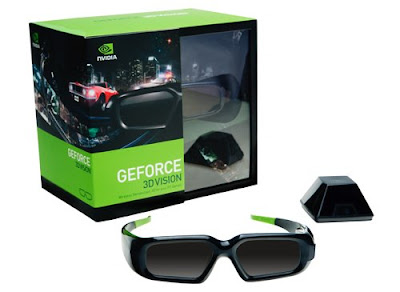
CONSUMER ELECTRONICS SHOW (CES) 2009 —LAS VEGAS, NV, 2009— NVIDIA Corporation, in conjunction with the world’s leading content developers, display manufacturers, and PC OEMs and system builders, is pleased to announce NVIDIA® 3D Vision™ for GeForce®, the world’s first high-definition 3D stereo solution for the home.

Forming the foundation for a new consumer 3D stereo ecosystem for gaming and home entertainment PCs, 3D Vision is a combination of high-tech wireless glasses, a high-power IR emitter and advanced software that automatically transforms hundreds of PC games into full stereoscopic 3D experiences. Designed to work with the new pure Samsung® and ViewSonic® 120 Hz LCD monitors, Mitsubishi® DLP® HDTVs, and the DepthQ HD 3D Projector by Lightspeed Design, Inc, 3D Vision unlocks crystal-clear, flicker-free 3D stereo imagery perfect for driving new experiences in 3D gaming, 3D movies, and 3D photography.

“Along with gaming innovations in Microsoft Windows and DirectX, NVIDIA 3D Vision proves there’s never been a better time to be a PC gamer,” said Corey Rosemond, group marketing manager, Windows Gaming. “By including support for previously released and upcoming Games for Windows and Games for Windows -- LIVE titles, PC gamers can expect a new level of immersion in full stereoscopic 3D, and enjoy broad support for the hottest games.”

Powered by NVIDIA GeForce GPUs, the number one choice of gamers worldwide, 3D Vision is the world’s highest quality stereoscopic 3D consumer solution, consisting of:

  • High-Tech, Wireless Active Shutter Glasses
    • Designed with top-of-the-line optics to deliver 2X the resolution per eye and ultra-wide viewing angles versus passive glasses. Comfortable to wear and modeled after modern sunglasses, offering a stylish and lightweight alternative to traditional 3D glasses. Fully untethered solution, offering free range of motion and up to 20 feet of wireless 3D viewing.
  • USB-based, High Power IR Emitter
    • Transmits data directly to active shutter glasses within a 20 foot radius and contains an easy to use real-time 3D adjustment dial.
  • Maximum Display Flexibility
    • Designed for pure ViewSonic and Samsung 120 Hz LCD monitors, Mitsubishi DLP 1080p HDTVs, and DepthQ HD 3D projectors, unlocking crystal-clear, flicker-free stereoscopic 3D gaming for multiple viewing solutions.
  • Out of the Box Game Compatibility
    • Advanced NVIDIA software automatically converts over 300 games to work in 3D stereo out of the box, without the need for special game patches. In addition, NVIDIA’s “The Way It’s Meant to Be Played” program ensures that future games will support 3D Vision. 3D Vision is also the only stereoscopic 3D gaming solution to fully support NVIDIA SLI®, NVIDIA PhysX™, and Microsoft® DirectX® 10 technologies.
  • Extended Usability On a Single Charge
    • A single charge using a standard USB cable enables over 40 hours of continuous 3D stereoscopic gaming. Intelligent circuit design built into the glasses automatically shuts the glasses off after 10 minutes of inactivity to preserve battery life.
  • Support for 3D Stereo Photography and Movies
    • Includes a free 3D Vision viewer which allows consumers to take in-game screenshots and view them in 3D stereo, or import and view stereoscopic pictures and movies from a variety of different capture sources and online web photo galleries.

“For gamers, 3D Vision for GeForce represents a whole different way of experiencing the game, and for developers, it unlocks the potential of making the game literally pop off the screen,” said Ujesh Desai, vice president of GeForce desktop business at NVIDIA. “From games to movies to photography, 3D Vision delivers a truly immersive awesome 3D experience.”

3D Vision for GeForce is available starting today from leading U.S. e-tailers including www.compusa.com, www.tigerdirect.com, www.microcenter.com; as well as direct from www.nvidia.com for a suggested MSRP of $199 USD. Worldwide availability will be announced later, in the first quarter.


Romanian:

NVIDIA Corporation anunţă că principalii dezvoltatorii de aplicaţii, producători de ecrane, producători de echipamente şi integratori de sisteme şi-au manifestat, în cadrul târgului CES 2009, suportul pentru soluţia NVIDIA 3D Vision dezvoltată pentru GeForce, prima soluţie 3D stereo de înaltă definiţie pentru acasă.

3D Vision este o soluţie formată dintr-o pereche de ochelari stereoscopici wireless, un emiţător de mare putere IR şi o aplicaţie software avansată care transformă în mod automat sute de jocuri pentru PC în experienţe 3D totale.

Bazată pe unităţile de procesare vizuală NVIDIA GeForce, prima alegere a jucătorilor din întreaga lume, 3D Vision este cea mai avansată soluţie stereoscopică 3D pentru utilizatori formată din:

Ochelari stereoscopici activi wireles - Spre deosebire de ochelarii pasivi, ochelarii NVIDIA sunt concepuţi să furnizeze o rezoluţie dublă pentru fiecare ochi şi unghiuri de vizualizare extrem de generoase. Având un design asemănător ochelarilor de soare moderni, 3D Vision oferă o alternativă mult mai comodă pentru ochelarii 3D tradiţionali. De asemenea, ochelarii permit o libertate de mişcare mare şi până la 7 metri de vizualizare 3D wireless.

Emiţător IR de mare putere, USB - Transmite datele direct către ochelarii stereoscopici la o distanţă de până la 7 metri şi dispune de o funcţie de optimizare 3D în timp real.

Flexibiliate în afişare - Funcţionează cu orice monitor LCD de 120 Hz şi reproduce imaginile stereoscopice la o claritate avansată

Compatibilitate extinsă cu o diversitate mare de jocuri - Aplicaţia software avansată NVIDIA converteşte automat efectele de vizualizare pentru mai mult de 300 de jocuri în formatul 3D, fără a necesita patch-uri speciale. În plus, cu ajutorul programului “The Way It’s meant to Be Played” NVIDIA asigură compatibilitatea jocurilor viitoare cu tehnologia 3D Vision.

Utilizare îndelungată la o singură încărcare - O singură încărcare cu ajutorul unui cablu USB standard asigură peste 40 de ore de joc stereoscopic 3D. Datorită unui circuit inteligent integrat, ochelarii se opresc automat din funcţionare dupa 10 minute de inactivitate, prentru a conserva autonomia bateriei.

Compatibilitate cu fotografiile şi filmele 3D stereo - Include o aplicaţie de vizualizare 3D care le permite utilizatorilor să captureze secvenţe din joc pe care, după aceea, le pot vizualiza în formatul 3D Vision. De asemenea, aplicaţia permite descărcarea şi vizualizarea conţinutului stereoscopic provenit dintr-o varietate mare de surse şi galerii foto online.


English:

Santa Clara, California-based NVIDIA is said to be planning to rename its GeForce graphics cards, by introducing a new naming scheme for its GeForce 9800 GTX+ and 9800 GT video cards. The green company has been known for such practices in the past, having introduced new graphics cards that were basically rebranded versions of existing models. In true NVIDIA fashion, the chip maker is now expected to announce two new cards at this year's CeBIT show in Hanover, next month.

More specifically, the company will be adding the GeFore GTS 240 and GeForce GTS 250 to it lineup. Despite no details on the technical specifications of these new cards, NVIDIA is expected to officially announce them at the upcoming computer show in Hanover, Germany. In addition, it looks like these models will be based on some of the manufacturer's current GeForce cards, namely the 55nm GeForce 9800GTX+ and the 9800GT.
English:
NVIDIA is already known for releasing cards with different branding, but providing the same features as some of its models that were already on the market. GeForce 9800GTX+ is one such example, as it has been introduced in mid-2008 as an alternative to AMD's surprisingly fast HD4850 graphics card. The new card featured a 55nm-based GPU and provided a slight improvement in processing and frequency. The GeForce 9800GT is also an example of the rebranding practices of NVIDIA. This GPU was launched as a renamed version of the GeForce 8800GT, one of the first G92-based graphics cars to hit the market, in late 2007. The only difference here was that the new card supported NVIDIA's Hybrid SLI technology.

If rumors are true, the company might have more to lose than to gain, as users might get confused by the new brand names of these cards. On the other hand, the move appears rather explainable, as the chip maker is planning to better compete in the entry-level and mainstream market segments.


Romanian:

Nvidia intenţionează să anunţe la expoziţia CeBIT din Germania noul GeForce GTS 250. Din păcate acesta nu va reprezenta o evoluţie de la G92, ci doar o redenumire a vechiului G92 care se găseşte în 9800 GTX+.

Nvidia şi-a anunţat partenerii că „GeForce GTS 250 are exact aceleaşi specificaţii ca 9800 GTX+, adică acelaşi GPU, memorie şi PCB. Singura schimbare o va reprezenta noul VBIOS care va reflecta noul nume.” Asta înseamnă practic că odată cu noua lansare, partenerii Nvidia (XFX, MSI, BFG, EVGA etc) vor trebui să renunţe la actualele stocuri sau să le vândă la preţuri mai mici pentru a face loc unei placi identice. Vestea buna este că cel mai probabil noua placă va veni la un preţ redus.

Nu numai 9800 GT+ va suferi schimbări de nume, dar şi 9800 GT (care de fapt este un 8800 GT redenumit) care va deveni GeForce GTS 240.

Singurul dezavantaj îl va reprezenta incompatibilitatea SLI cu vechea generaţie din cauza noului VBIOS, deşi vor fi practic aceleaşi plăci video.